These photos are to share the beauty of our land south of Cheney, Washington. We are in process of creating a home on the land. Please feel free to ask questions or share your thoughts.
These photos are rather large so if you are on a slow feed please be patient.
We've been busy for the past few weeks. Photo taking and web updating sometimes takes a back seat to getting things done on the house. We installed the pump in the well and put up the temporary electric pole. The steel building arrived on trucks, and -- finally -- the excavation and actual construction began. It has taken us all spring, and then all summer getting designs, permits, deliveries, and preparing for construction. Now it's September and we finally have a building permit and can begin actual construction.
Our house is 60 feet by 100 feet. Many lots in cities and towns are no bigger than that. It is big enough to drive in with a loaded concrete truck, turn it around, and drive the empty truck out, all with several feet to spare. Everything we do takes a lot of material and a lot of work to cover the distance.
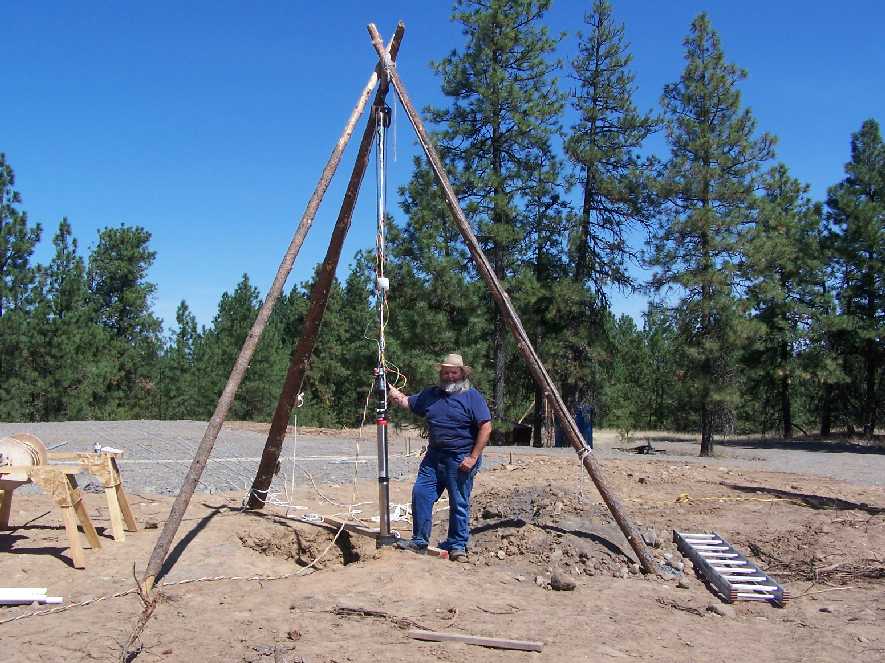
Our Sears 3 HP pump finally arrived in August. We used the old tried and true method of a tripod with block and tackle to lower it into the well.
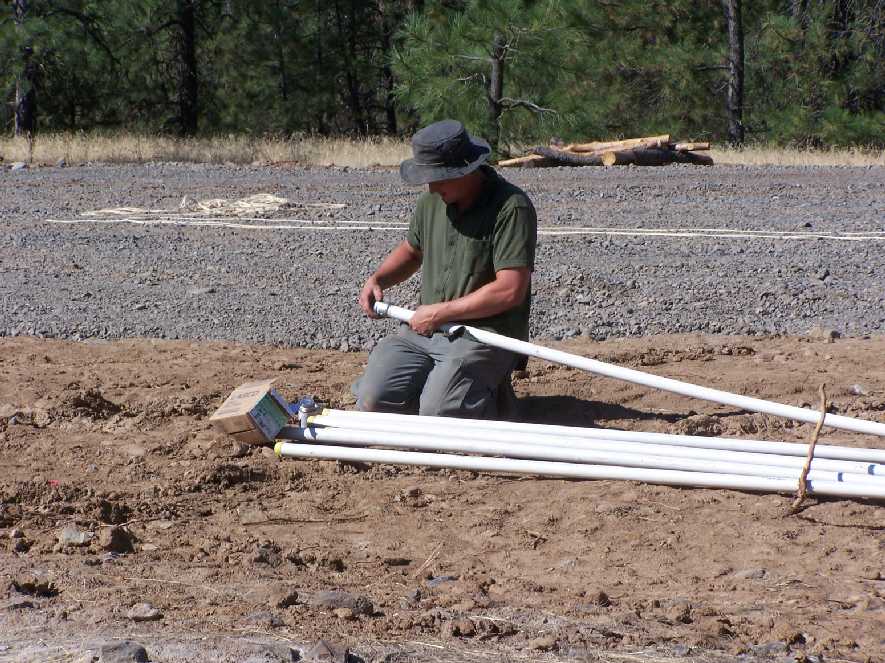
We used 460 feet of 1 1/4 inch schedule 80 PVC pipe to lower the well. There is also a 1/2 inch nylon rope. We lowered the pump on the rope 480 feet, left 30 feet for future at the top of the well, and had over 200 feet left from a 600 foot roll. If the numbers don't add up it's because the rope stretched a lot. It took Justin and Brad all day to lower the pump.
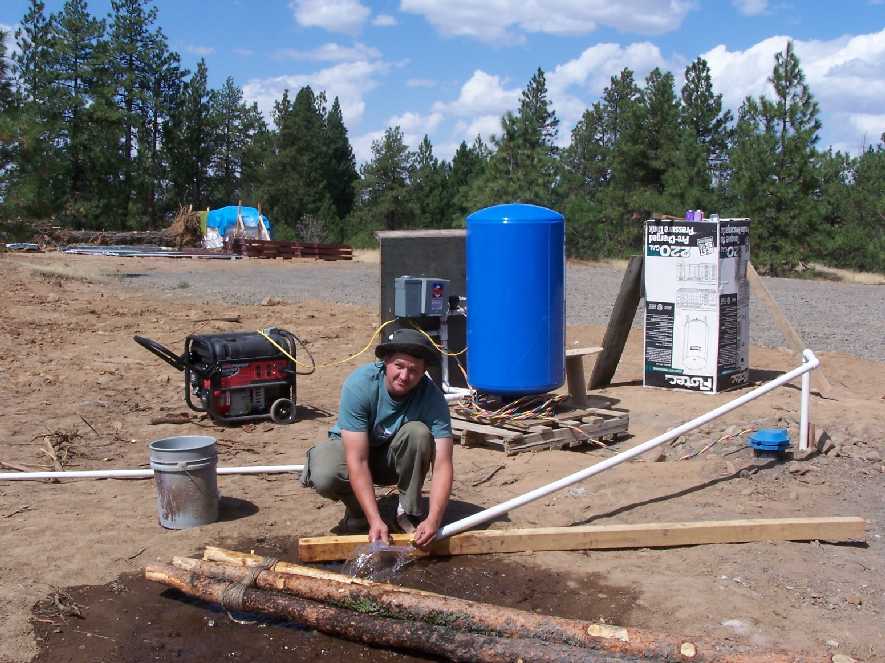
After a couple of thousand dollars in pump, pipe, and wire it's good to see that the pump works and water comes out. We are getting about 18 gallons per minute of 68 degree F water. We were surprised at how warm the water is.
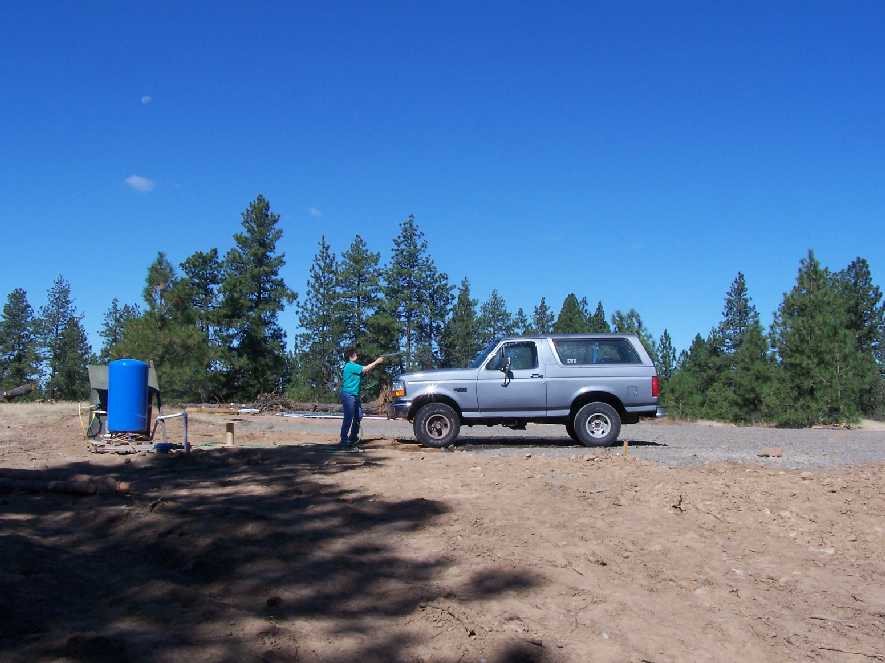
At last, we can wash the car.
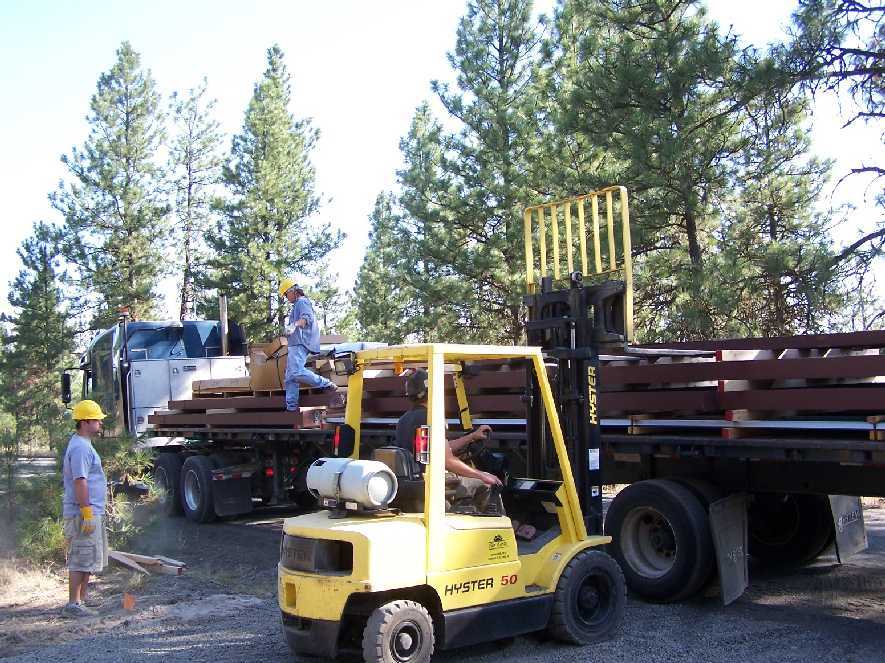
The steel building package arrived on several truck over a few days in August. We rented a fork lift to get the big beams off the truck
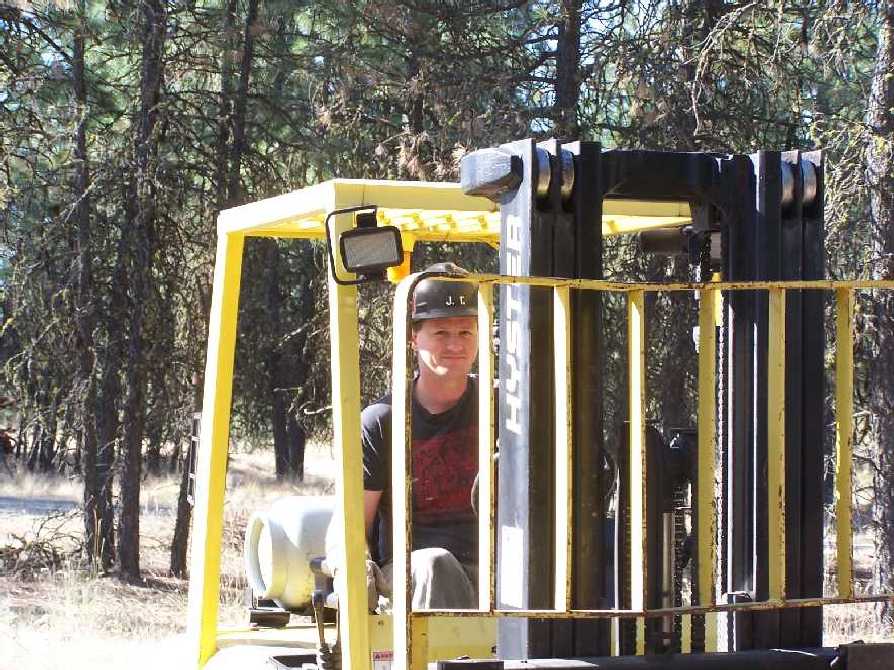
Justin turned into a good fork lift operator.
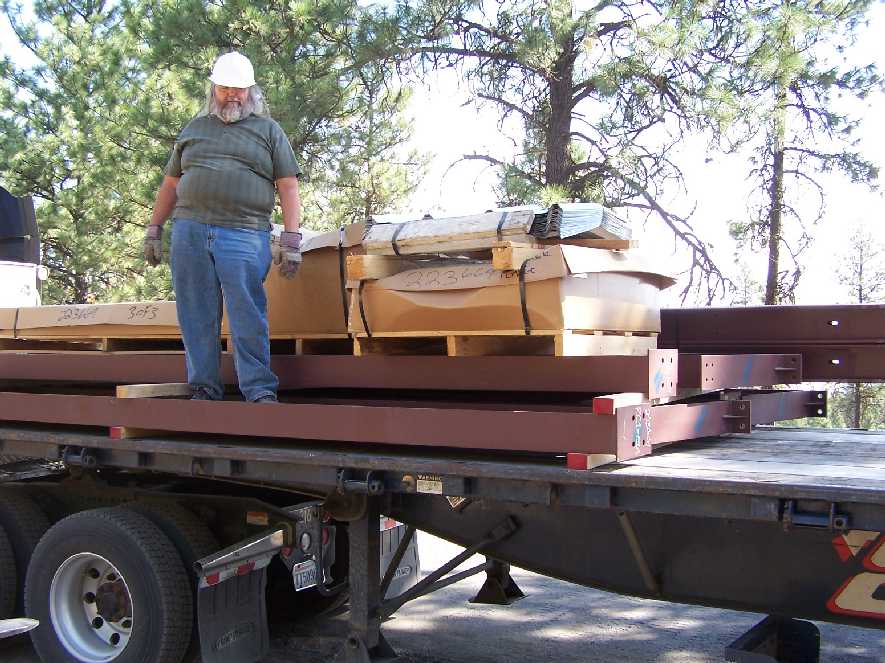
It took about 4 hours to unload the 50 foot trailer. We have a large pile of red iron and siding.
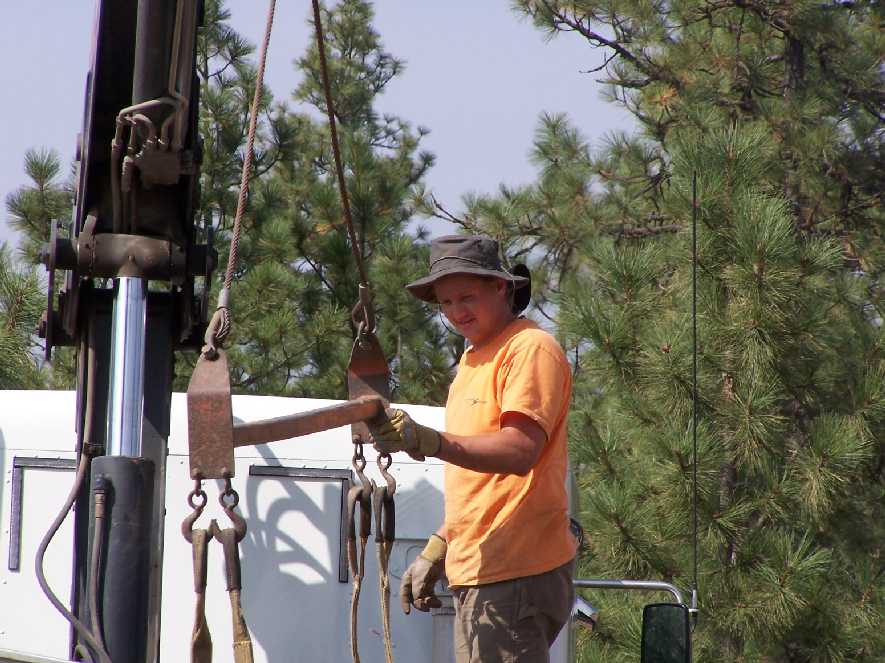
A truck load of siding arrived. It was manufactured in Washington. The truck navigated our twisting driveway.
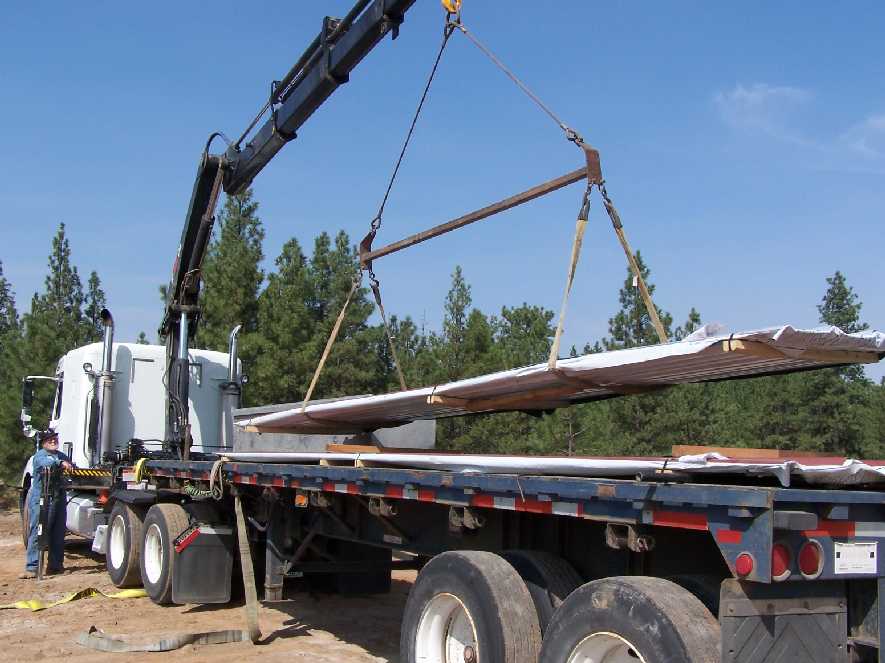
The siding truck had a boom to unload the load.
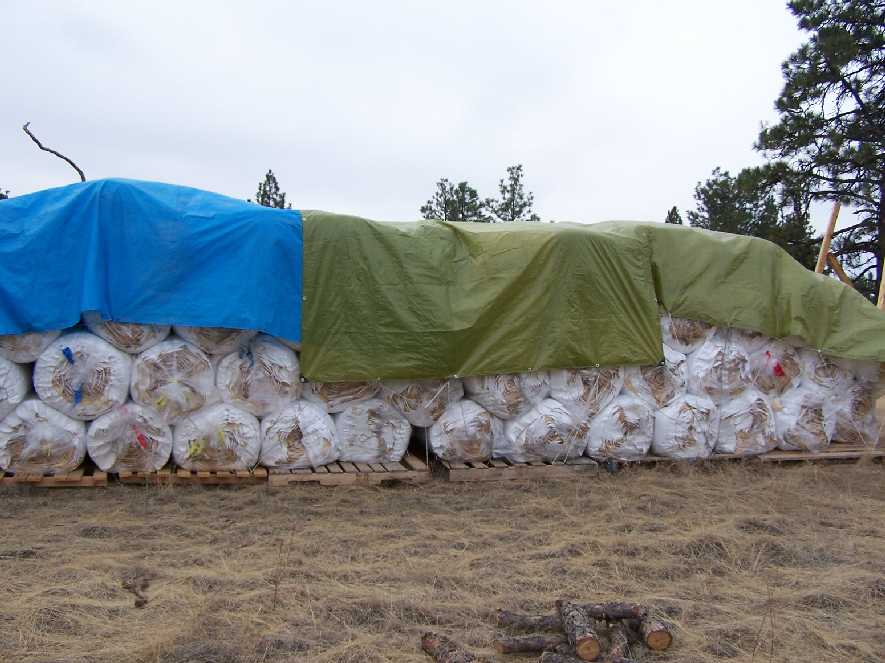
Another truck delivered a large pile of insulation. [Follow up 9-25-05. I got a phone call later saying that the trucker had delivered our load and someone else's insulation all to us. It did look like a lot. When we sort it out we will have to give some back]
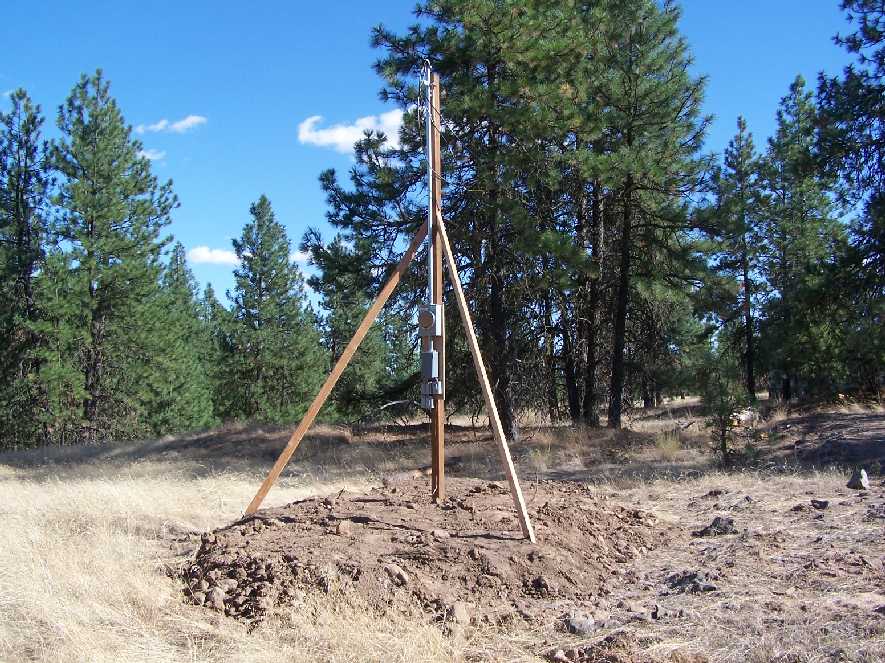
We got the temporary power ordered and paid for the first of August. It has been 6 weeks and still isn't connected.
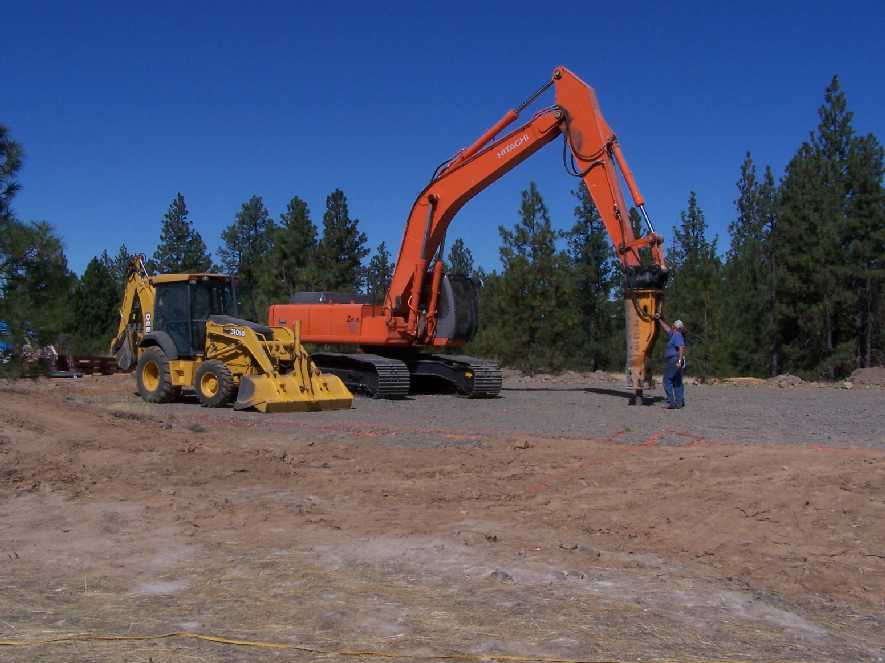
Early in September, after months of frustration, we finally start excavation for the foundations. Since we are building on solid basalt, very hard rock, and blasting is now so closely regulated, a half million dollar excavator with a huge hammer is the only legal way to break rock. $2,300 for 9 hours.
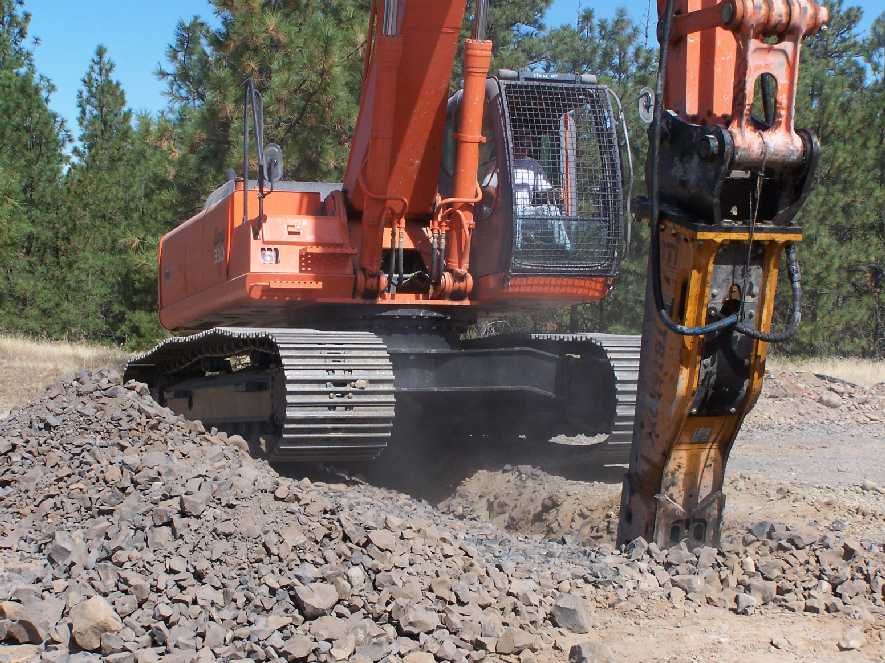
WHAM, WHAM, WHAM!
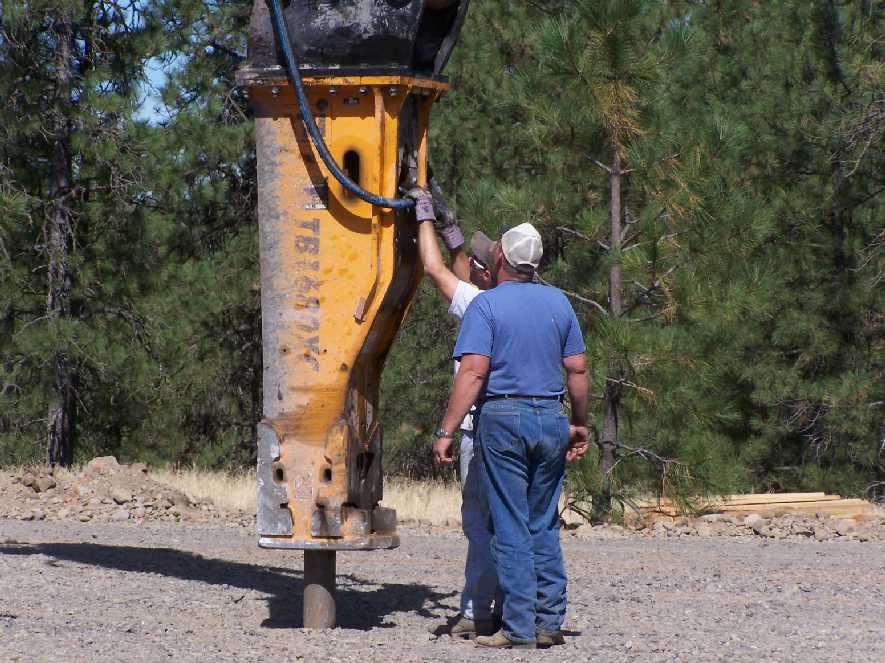
As jackhammers go this is a large one.
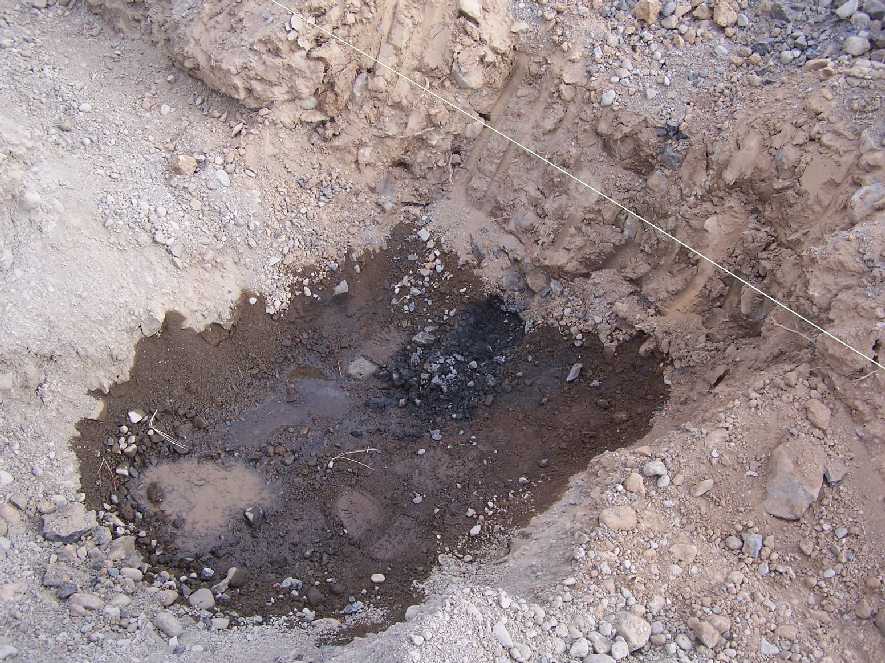
Ten thousand dollars for a 490 foot deep well, and the 4 foot foundation hole strikes water. We bailed it out with a wet vacuum, and a small stream refills the hole up to about 4 inches deep, about 20 inches below original grade. Our site is on top of a rocky bluff, higher than any land anywhere around. We have no idea where this water is coming from. It isn't enough for a home so the deep well was necessary.
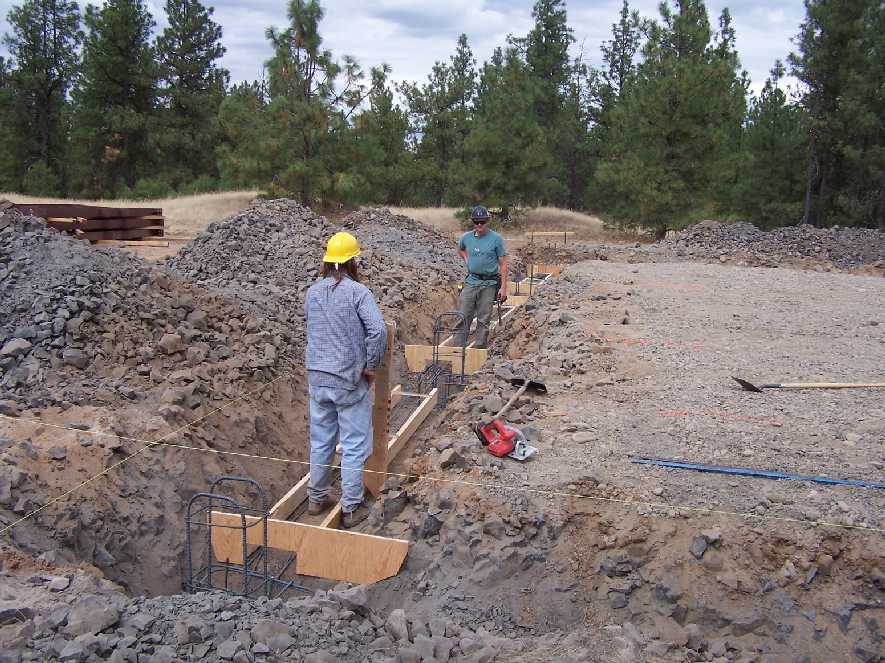
Once the excavation is done we started bending rebar and getting ready to pour concrete footings.
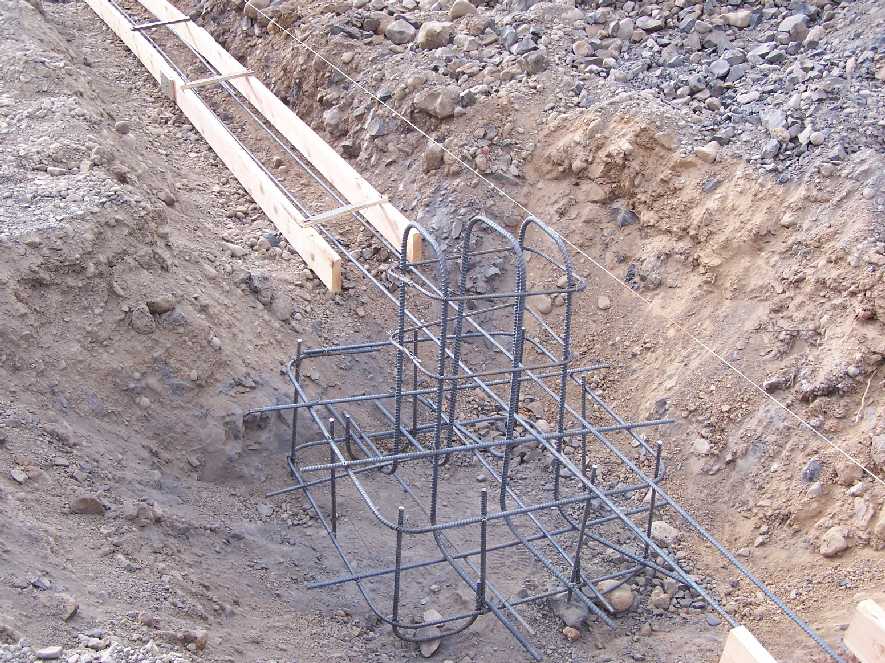
Here's a pic of the footing forms with rebar ready for concrete.
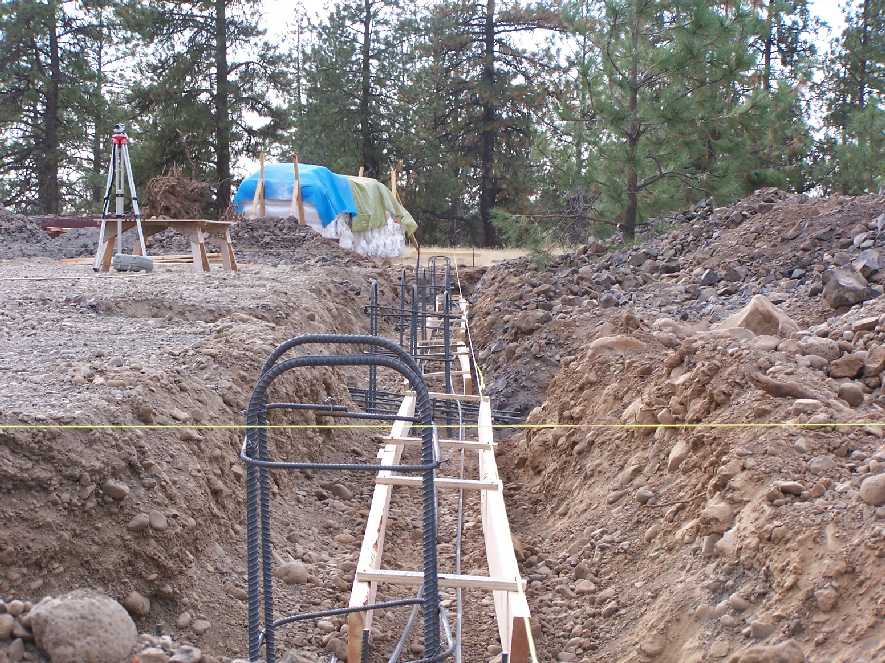
View from the northeast corner looking west down the line of footing forms. The large piers are just dug into the rock. The over fill concrete is easier than building box forms.
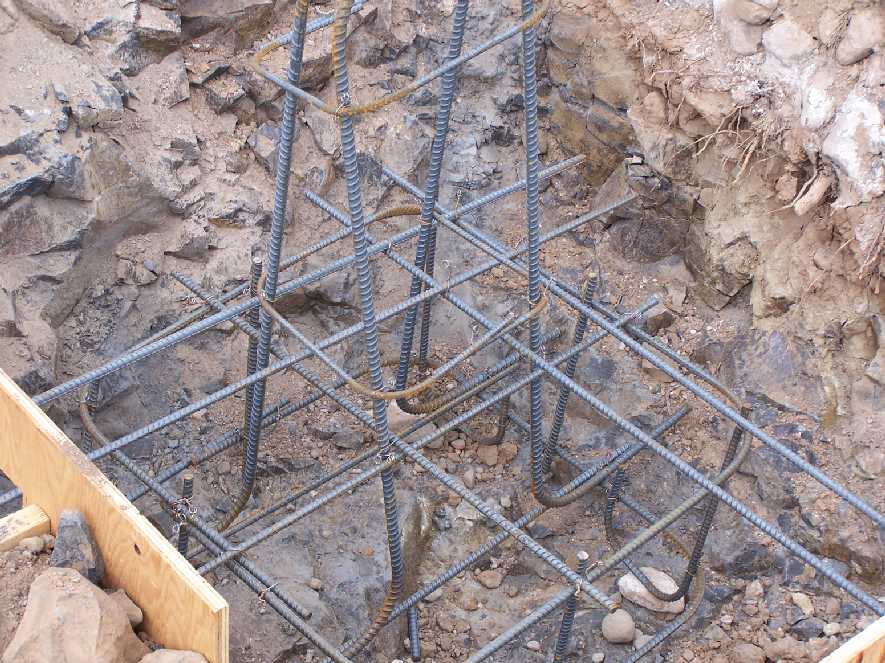
We cleaned the dirt out of the foundation hole in the northwest corner so we could see the actual rock left by the huge rock breaker. This "blue basalt" is harder than the other kind.
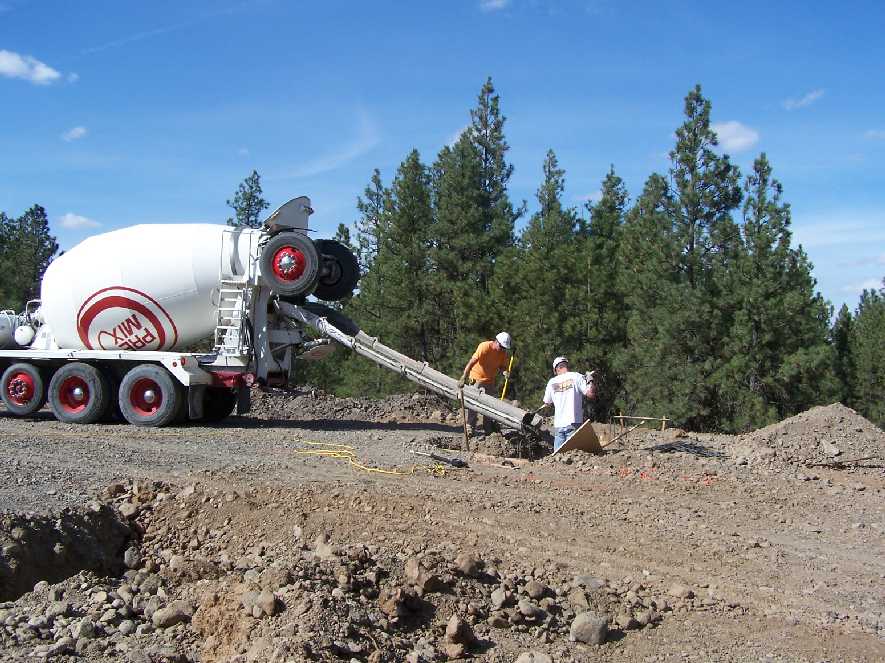
The concrete arrived and we made our first pour on Wednesday, September 14, 2005. In this photo you can see the driveway into the inside of the building where we have not yet excavated to allow for pouring the north side foundation. It is difficult to drive around outside on the north. This concrete truck is inside of our building pouring concrete near the NE corner.
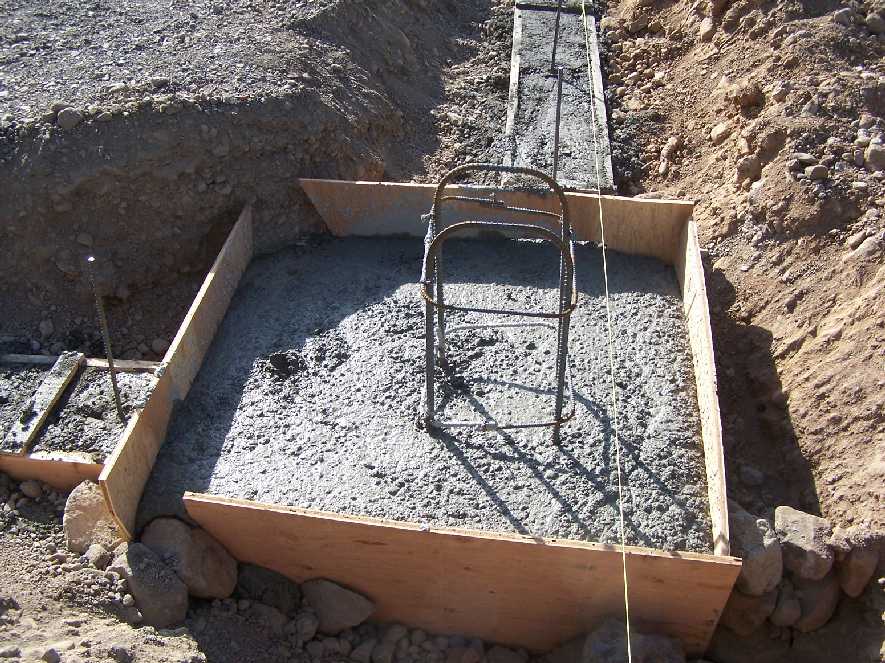
After the pour we have concrete footings, and finally somewhere that is solid and we can start measuring the layout more permanently than strings in the air. This is the NE corner.
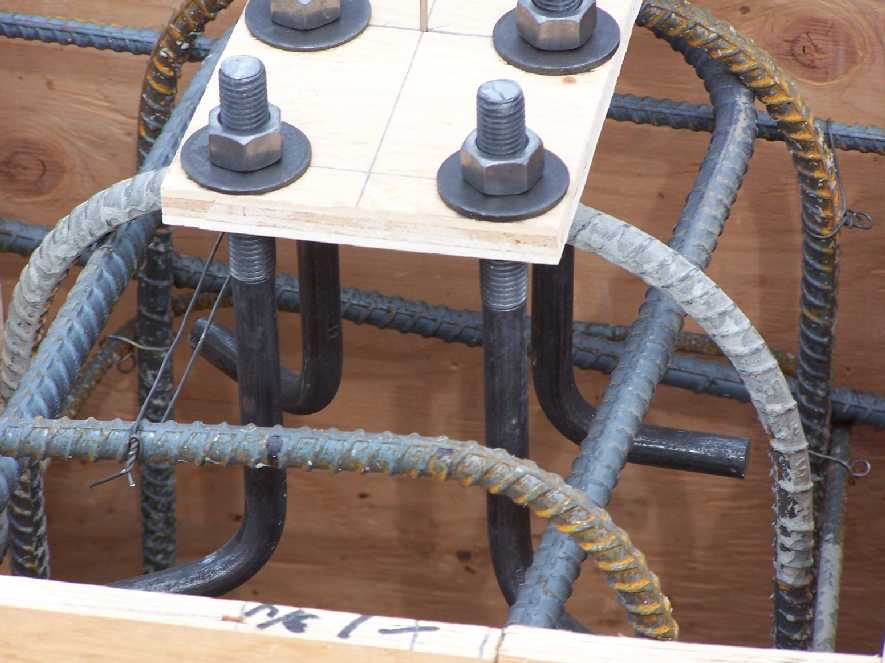
The second level of concrete is the stem walls and anchor pylons. Our building is 60 feet clear span across using steel frames. The steel frames sit on these anchor bolts which must be supported underneath to transfer all the down, up (wind), and side loads to the earth. This photo shows a tangle of 4 each 3/4 inch anchor bolts with 3/8, 1/2, 5/8, and 3/4 inch rebar.
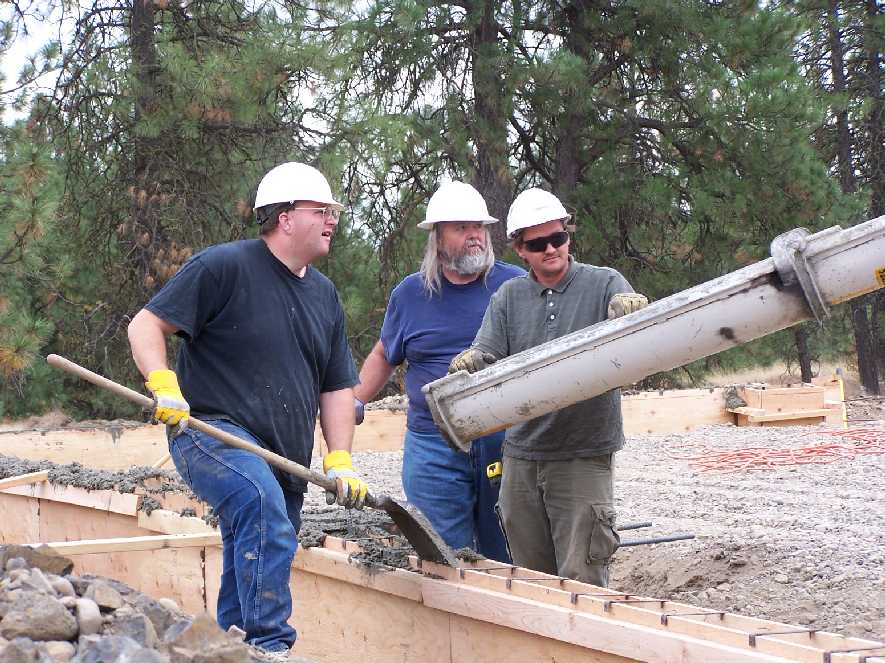
My son Justin has been working with us for two months. Justin has been running the chute. This week my other son, Jason, the large guy arrived so we put him to work with a shovel. Here we are pouring the stem wall along the north side.
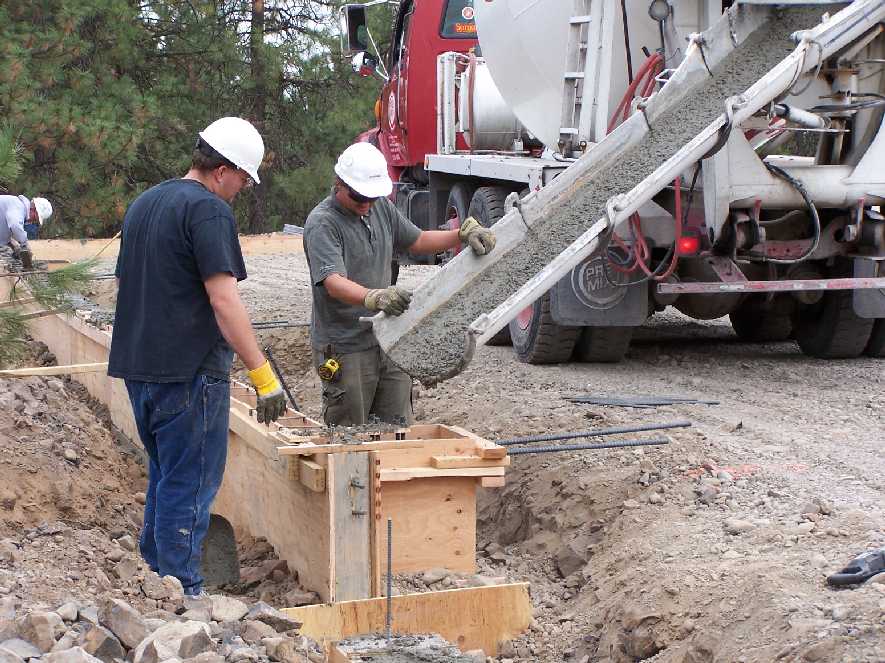
Here we finished the stem wall to the end of the forms that were set up. Our schedule puts in about 100 feet of footings, and the next pour is to follow with stem wall and more footings in a sequence.
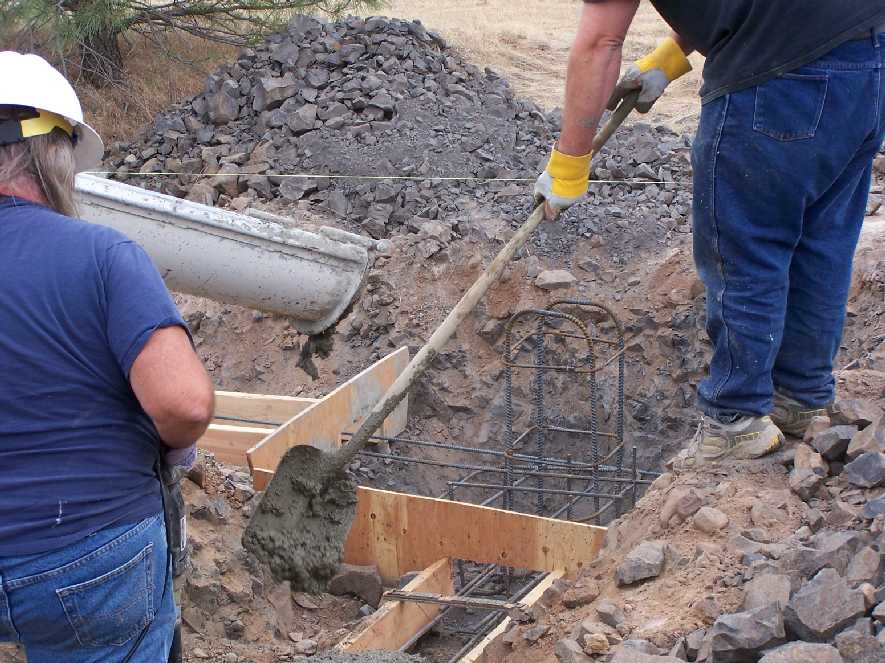
Since we are a long way from the concrete plant they charge $80 per load to deliver the concrete. I am trying to buy full loads instead of several small loads. We pour some stem wall and then continue footings until it runs out. This is the NW corner footing.
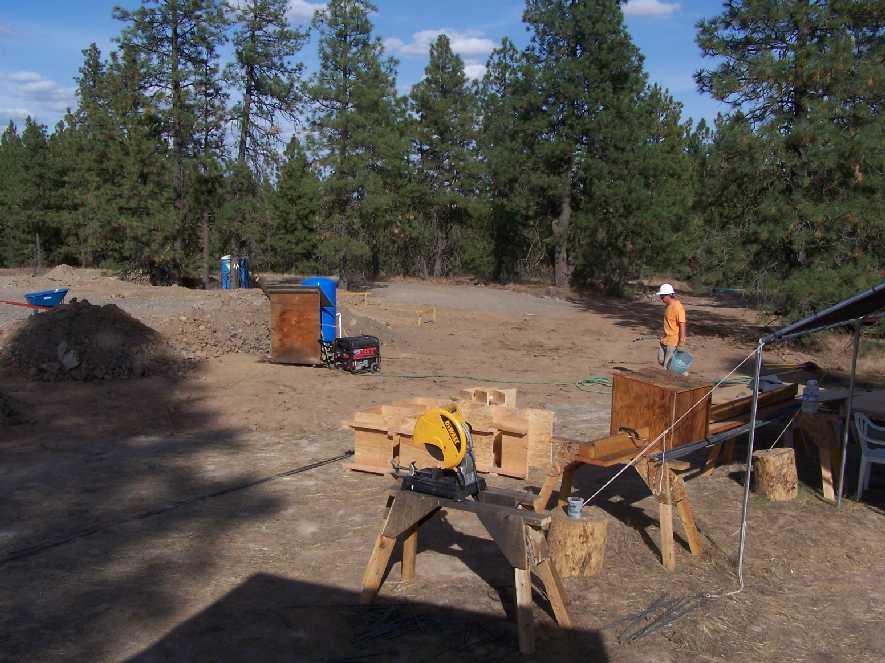
Our construction camp next to the house site has started to feel like home. Here you can see the well, the rebar chop saw, the wood chop saw with cover, the portable generator, the portajohn, and Justin carrying something toward the house.
